
Preventing bone density loss in Perimenopause

If you're moving through perimenopause or menopause, you've probably already heard the warnings about bone density.
What you may not have heard is that one of the simplest, most accessible tools for protecting your bones doesn't come in a bottle, it comes from your own bodyweight, and it starts with jumping.
I have had my own personal journey with bone health. At the ripe age of 24 a DEXA scan told me that I had osteopenia. I spent the next year doing learning how to lift weights safely and jumping. After one year I did another scan and I had significantly increased my density out of the osteopenia range. Now at the age of 35 I am worried for other reasons and it starts with ‘estrogen’ and ends with ‘declining’.
Now as a naturopath educating women about bone health is extremely important to me. Declining estrogen during perimenopause and menopause accelerates bone turnover, and for many women, bone loss can happen faster than they realise, often without symptoms until a scan or a fracture reveals it. The encouraging news from the research is that our bones remain responsive to load-bearing exercise well into midlife and beyond, and jumping is one of the most efficient ways to deliver that load.
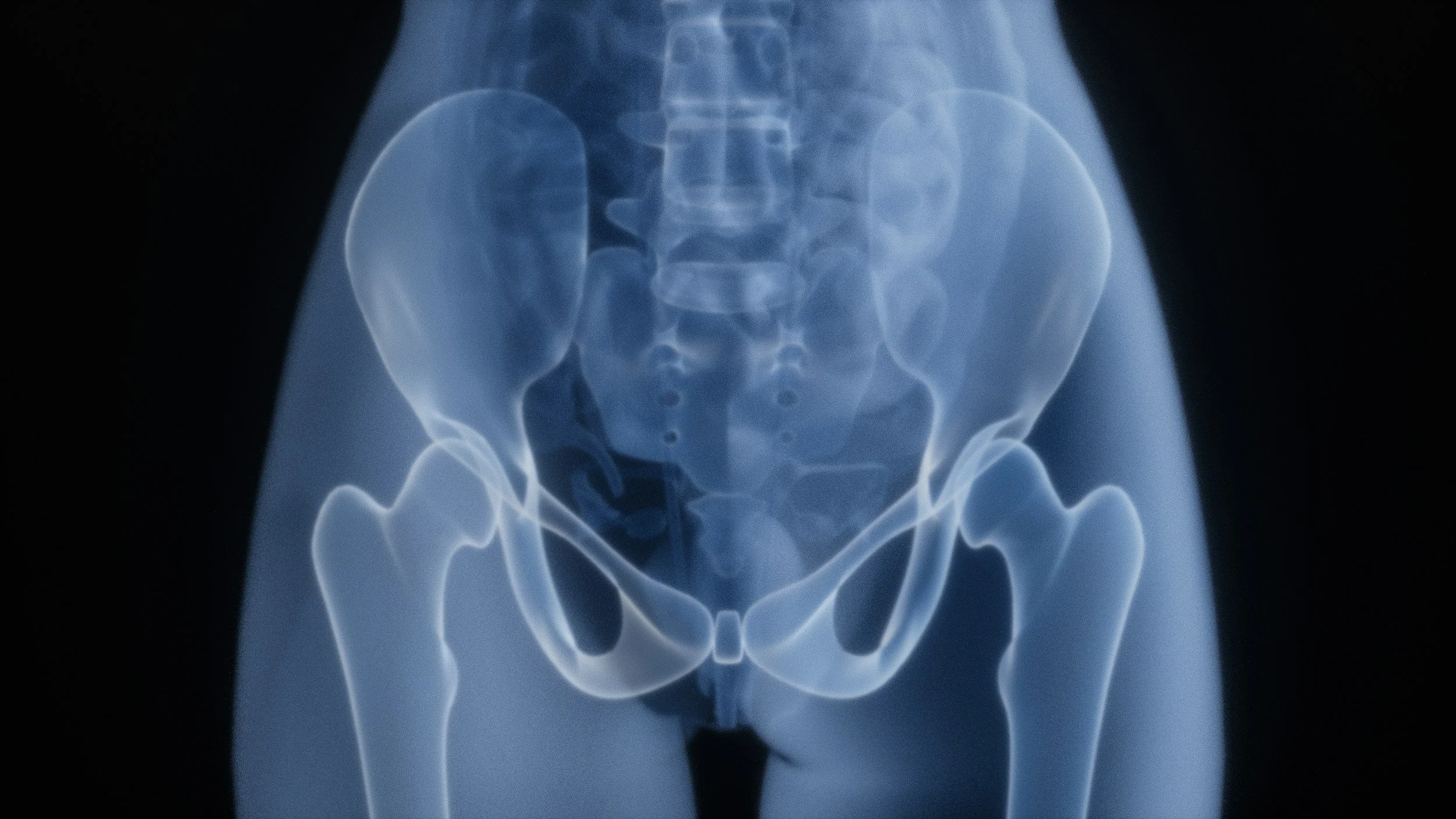
Why Bone Density Changes in Perimenopause and Menopause
Bone is living tissue, constantly cycling through a process called remodeling: osteoclasts resorb (break down) old bone, and osteoblasts lay down new bone matrix to replace it. In healthy premenopausal women, this cycle is fairly balanced. Estrogen acts as a key regulator of that balance, it suppresses osteoclast activity and promotes osteoclast apoptosis (programmed cell death), essentially keeping the resorption side of the cycle in check. It also influences osteoblast lifespan and activity, supporting the bone-building side of the equation. As estrogen levels fall through perimenopause and drop sharply at menopause, that regulatory brake is released. Osteoclast activity rises relative to osteoblast activity, tipping bone remodeling into a resorption-dominant state, this is why bone mineral density (BMD) loss accelerates so noticeably in the years around the menopausal transition, sometimes by 1-2% or more per year at the spine and hip. This is exactly why building strategies in during this phase, rather than waiting, is worth prioritising.
The Research on Jumping and Bone Density
There is a growing body of clinical research specifically in women navigating this hormonal transition and jumping. Across several controlled trials, a consistent picture emerges: when postmenopausal women with osteopenia are put through supervised, high-impact jump-based training, their bone mineral density improves significantly at both the lumbar spine and the femoral neck (hip), the two sites that matter most for fracture risk and these gains consistently outperform lower-impact strengthening work or no exercise at all. Trials combining heavy resistance training with impact loading go a step further, showing not just bone density gains but real improvements in functional strength alongside them, which matters just as much for fall and fracture prevention. Pooled data across multiple jumping-exercise trials backs this up in younger, premenopausal women too, confirming that impact loading is a reliable stimulus for bone across life stages rather than something that only works in the very young. And earlier foundational research comparing pre- and postmenopausal women found that both groups can respond to high-impact loading, though the pattern of that response shifts with hormonal status which is exactly why starting impact training as early as possible in this transition, rather than waiting, tends to pay off.
A few key points worth holding onto from this research:
There is a specific way to jump and its not the bend your knees when you land approach. High-impact, jump-based loading tends to outperform lower-impact approaches like walking for stimulating bone density at the hip and spine.
Both bone density and functional strength (balance, power, fall resistance) improve together with the right programme.
The bone-building response to impact loading isn't limited to younger women, it holds up in postmenopausal populations too.
Starting earlier in the perimenopause-to-menopause transition appears to make the most of your bone's remaining responsiveness.
How Jumping Builds Bone
Bone responds to mechanical stress through a process called mechanotransduction, put simply, bone cells sense the load placed on them and respond by laying down more bone in the areas under strain. Jumping generates ground reaction forces well above bodyweight, which is a stronger osteogenic (bone-building) signal than most other forms of exercise. Walking, for comparison, generates a much smaller loading force, which is one reason it's protective for general health but often insufficient on its own to meaningfully shift bone density once significant loss has begun.

Getting Started Safely
If you have osteopenia or osteoporosis, or you're newer to impact exercise, this is not a "jump straight in" situation (pun very much intended).
Start low and build gradually even small drop-landings or low box step-downs can begin conditioning your joints and bones for higher-impact work.
There is a specific way to jump and we all need to re learn how to do it correctly. Osteogains app is an amazing programme made by Kiwi’s that has video guides to teach you how to jump safely and effectively for bone density. The outcome of their research showed that bone health can be improved by 3.5-5% with only 2-5 minutes per day.
Learn how to land to maximise bone density and still support your knees and any other joints that may need extra care.
Build a strength base first stronger legs, hips and core support you through the landing phase and reduce injury risk.
Get individual guidance your starting point should reflect your current bone density, joint health, and any existing injuries, so a program tailored to you (rather than a generic online routine) matters here.
Be consistent the research protocols above generally involved sessions two to three times a week for several months; bone adapts slowly, so this is a long-game strategy, not a quick fix.
Bone Health Is About More Than Impact Exercise
Jumping is a powerful piece of the puzzle, but it works best alongside the full picture: adequate protein and calcium intake, remineralising, sufficient vitamin D, resistance training for overall musculoskeletal support, and management of the hormonal shifts of perimenopause and menopause. As a naturopath, this whole-picture approach is where I spend most of my time with clients because bone density doesn't respond to any single intervention in isolation.
If you're navigating bone health changes during perimenopause or menopause and want a plan built around your own scan results, current activity level, and health history, I'd love to help you build one. If you would like to talk about' ‘how’ book a clarity call here.

Frequently Asked Questions
Does jumping actually help bone density during menopause? Yes several controlled trials in postmenopausal women have found that supervised, jump-based training improves bone mineral density at the hip and spine more than lower-impact exercise alone.
Is jumping safe if I already have osteopenia or osteoporosis? It can be, but it needs to be introduced carefully and ideally under guidance, starting with lower-impact landing work and building up gradually as strength and confidence improve. If you have significant osteoporosis or a fracture history, get individualised guidance before starting.
How often do I need to jump to see a benefit for bone density? Most of the research protocols showing benefit involved sessions two to three times per week over a minimum of six months, since bone remodels slowly.
Can walking alone protect my bones in perimenopause? The short answer is no. Walking is valuable for general health and mild loading, but the research suggests it generates lower ground reaction forces than jumping and tends to be less effective at meaningfully shifting bone mineral density once loss has begun.
What else should I be doing alongside jumping for bone health? Adequate protein and calcium, sufficient vitamin D, many other minerals such as boron, resistance training, and addressing the hormonal changes of perimenopause and menopause all work together with impact exercise to support bone density.
References
Basat H, Esmaeilzadeh S, Eskiyurt N. The effects of strengthening and high-impact exercises on bone metabolism and quality of life in postmenopausal women: a randomized controlled trial. J Back Musculoskelet Rehabil. 2013;26(4):427-435. PMID: 23948830. https://pubmed.ncbi.nlm.nih.gov/23948830/
Clissold T, Cronin JB, De Souza MJ, Winwood PW (2022) Program design considerations for bone health in premenopausal women. Arch Sports Med Physiother . 2022; 7(1): 7-15. Available from: 10.17352/asmp.000015
Clissold T, Cronin JB, De Souza MJ, Winwood PW (2022) Jump-landings that supersede bone health threshold requirements for premenopausal women. Arch Sports Med Physiother . 2022; 7(1): 1-6. Available from: 10.17352/asmp.000014
Clissold, T. L., Cronin, J. B., De Souza, M. J., Wilson D. & Winwood P. W. (2019). Bilateral multidirectional jumps with reactive jump landings achieve osteogenic thresholds with and without instruction in premenopausal women Clinical Biomechanics. 73 (2019) 1-8. Doi.org/10.1016/j.clinbiomech.2019.12.025
Watson SL, Weeks BK, Weis LJ, Horan SA, Beck BR. High-Intensity Resistance and Impact Training Improves Bone Mineral Density and Physical Function in Postmenopausal Women With Osteopenia and Osteoporosis: The LIFTMOR Randomized Controlled Trial. J Bone Miner Res. 2018. PMID: 28975661. https://pubmed.ncbi.nlm.nih.gov/28975661/
Zhao R, Zhao M, Zhang L. Efficiency of jumping exercise in improving bone mineral density among premenopausal women: a meta-analysis. Sports Med. 2014;44(10):1393-1402. https://link.springer.com/article/10.1007/s40279-014-0220-8